How to Travel from Puerto Maldonado to Sandoval Lake: Step-by-Step
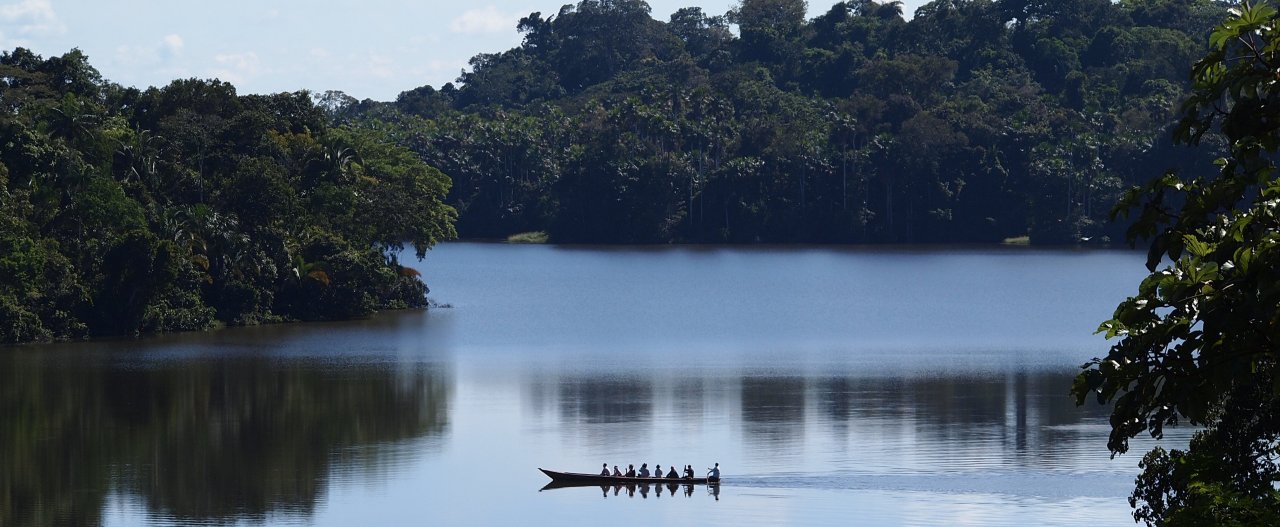
Nestled within the protected borders of the Tambopata National Reserve, Sandoval Lake (Lago Sandoval) is widely considered one of the most beautiful oxbow lakes in the entire Peruvian Amazon. It is a biological hotspot where you can easily spot endangered Giant Otters, prehistoric Hoatzin birds, multi-colored Macaws, and several species of caimans.
Conveniently, the main gateway to this natural paradise is the bustling jungle city of Puerto Maldonado. While Sandoval Lake sits relatively close to the city geographically, reaching its mirror-like waters requires a mandatory multi-modal journey involving a motorized riverboat, a checkpoint registry, and a trek through dense rainforest terrain.
Whether you wish to embark on this journey completely independently or prefer the comfort of an organized tour group, this comprehensive, step-by-step route guide for 2026 provides all the transit logistics, costs, and expert tips you need.
1. Route Overview: The Anatomy of the Journey
Getting from Puerto Maldonado to Sandoval Lake cannot be done via car, bus, or motorcycle. Because the lake is located within a highly protected national reserve, the ecosystem is shielded from road infrastructure. Consequently, every single traveler must follow the exact same geographic transit corridor:
[Puerto Maldonado City / Airport] ---> [CapitanÃa River Port] ---> [Boat Ride on Madre de Dios River] ---> [Sandoval Lake Trailhead / SERNANP Checkpoint] ---> [3 km / 1.8-mile Jungle Walk] ---> [Canoe Boarding Canal] ---> [Sandoval Lake Open Water]
The total travel time from the city center to the actual lake ranges between 2 to 3 hours, depending heavily on your walking pace through the jungle trail.
2. Step-by-Step Transit Breakdown
Step 1: Arriving in Puerto Maldonado and Reaching the Port
Your journey officially begins in Puerto Maldonado. Most travelers arrive via a 45-minute domestic flight from Cusco or a direct flight from Lima to the Padre Aldamiz International Airport (PEM). Alternatively, overnight long-distance buses run daily from Cusco along the paved Interoceanic Highway.
-
Action: Once you are in the city, you need to catch a local motor-taxi (mototaxi) or a standard sedan taxi.
-
Destination: Tell the driver to take you to the Puerto de CapitanÃa (the main river port on the banks of the Madre de Dios River).
-
Cost & Time: A mototaxi from the city center takes around 5 to 10 minutes and costs roughly 5 to 8 Peruvian Soles. From the airport, it takes about 20 minutes and costs around 20 to 25 Soles.
Upon arrival at Puerto de CapitanÃa, the urban landscape dissolves into the sights and sounds of the Amazonian waterways.
-
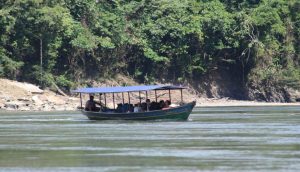
Action: You will board a traditional wooden outboard motorboat, locally referred to as a peki-peki or a bote peque-peque.
-
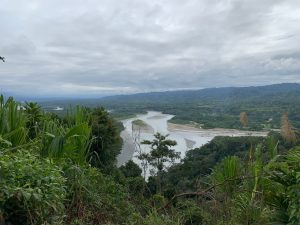
The Route: The boat heads downstream (east) on the massive Madre de Dios River. The navigation is scenic and relaxing, offering your first glimpses of jungle vegetation and riverside birdlife.
-
Duration: The river journey takes approximately 25 to 30 minutes. The boat will pull up to a large wooden wooden jetty on the right bank of the river, which marks the official entrance trailhead to the lake.
Step 3: The SERNANP Checkpoint and Entrance Fees
The boat drops you off at the official entrance of the Tambopata National Reserve sector managed by SERNANP (the National Service of Protected Natural Areas).
-
Action: You must disembark and walk up the wooden stairs to the park ranger station. Every visitor is required to register their passport or national ID in the official logbook.
-
Fees: If you are traveling independently, you must purchase your official entry ticket here. As of 2026, the standard entrance fee for foreign tourists is 30 Peruvian Soles per day. If you are on an organized tour, your guide will handle this process and the fee is already included in your package.
Step 4: The 3-Kilometer Trail Hike
After registering, the true physical adventure begins. You cannot take any motorized transport beyond this point; the only way forward is on foot.
-
The Trail: A 3-kilometer (1.8-mile) trail cuts directly through the primary and secondary forest. To protect the terrain and prevent hikers from sinking into deep mud, the park service has installed a raised wooden boardwalk along most of the path.
-
Duration: The hike takes anywhere from 45 minutes to 1.5 hours, depending on how often you stop to observe wildlife. Keep your eyes peeled for Capuchin monkeys, Squirrel monkeys, and leaf-cutter ants crossing the trail.
-
The Mud Factor: During the rainy season, parts of the trail that lack boardwalks can become incredibly muddy. Renting or bringing rubber boots (botas de goma) is absolutely mandatory during these months.
Step 5: The Canal and Paddle Canoes
At the end of the 3-kilometer trail, you will arrive at a small, shaded wooden resting platform bordering a narrow swampy clearing or water canal lined with spectacular Aguaje palm trees (Mauritia flexuosa).
-
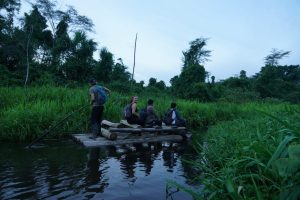
Action: Motorized boats are strictly banned on Sandoval Lake to prevent noise and chemical pollution. Therefore, you must board a small, unmotorized wooden paddle canoe.
-
The Final Stretch: Your guide or local boatman will quietly paddle the canoe through the narrow, winding mangrove-like canal. After about 10 to 15 minutes of maneuvering under overhanging branches, the narrow canal suddenly opens up into the wide, breathtaking expanse of Sandoval Lake.
3. Independent Travel vs. Organized Tours: Which is Best?
Can you visit Sandoval Lake completely on your own without a pre-booked tour agency? Yes, it is legally and physically possible. However, the experience differs wildly from booking a coordinated excursion.
Traveling Independently (The DIY Approach)
Independent travel is ideal for budget-conscious backpackers or highly experienced solo travelers who have flexible schedules.
-
Logistics: You must go to Puerto de CapitanÃa and negotiate a round-trip price with a private boat captain. You must explicitly agree on a pick-up time for your return trip (e.g., the next day or later that afternoon). A private boat charter can cost anywhere from 150 to 250 Soles total for the round trip.
-
Accommodation: If you plan to stay overnight, you must pre-book one of the few eco-lodges located around the lake (like Sandoval Lake Lodge or basic family-run tambos) and ensure they allow independent check-ins.
-
The Main Disadvantage: Without a professional naturalist guide equipped with a high-powered spotting scope, you will miss roughly 80% of the hidden wildlife. Spotting a camouflaged sloth or identifying the rustle of a rare monkey group in the canopy is incredibly difficult for untrained eyes. Furthermore, independent travelers do not have automatic access to paddle canoes at the end of the trail unless pre-arranged.
Booking an Organized Tour (The Recommended Approach)
For the vast majority of tourists, booking an all-inclusive tour with an authorized operator like Manu Jungle Expeditions is the superior option.
-
Total Peace of Mind: A private vehicle picks you up from the airport or your hotel in Puerto Maldonado. Your dedicated boat is waiting at the port, your reserve entry tickets are pre-purchased, and your rubber boots are sized and ready.
-
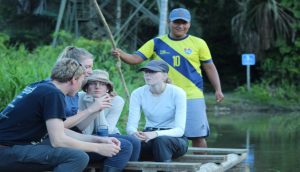
Wildlife Maximization: Certified guides know the exact territories of the resident Giant Otter family and the nesting trees of the macaws. They carry professional tripods and binoculars, ensuring you get National Geographic-quality views and photos.
-
All-Inclusive Comfort: Tours typically include all meals, mineral water, specialized night walks to find tarantulas and caimans, and comfortable lodging right in the heart of the jungle.
| Feature | Independent Travel (DIY) | Organized Agency Tour |
| Average Cost | Lower (but high private boat charter fees if solo). | Higher (all-inclusive value). |
| Logistical Effort | High (constant price negotiations). | Zero (fully managed from start to finish). |
| Wildlife Spotting Success | Low to Moderate. | Extremely High (with professional scopes). |
| Flexibility | High time flexibility. | Structured itinerary optimized for wildlife hours. |
4. Packing Essentials for Sandoval Lake
To ensure your journey through the trail and your time on the open water is comfortable, make sure your daypack includes the following items:
-
Passports: Crucial for the SERNANP ranger station registry.
-
Footwear: Sturdy hiking shoes for the dry season; tall rubber boots for the wet season.
-
Sun Protection: A wide-brimmed hat, polarized sunglasses, and biodegradable sunscreen. The open waters of the lake offer zero shade, and the tropical sun can be intense.
-
Insect Repellent: Bring a high-quality insect repellent containing DEET or Picaridin. Apply it before stepping onto the 3-kilometer trail.
-
Waterproof Poncho: Rainstorms in the southern Peruvian Amazon can materialize out of nowhere, even during the dry season.
-
Dry Bags or Zip-locks: Essential for protecting your camera gear, smartphones, and documents during the boat rides.
5. Summary Checklist for Your Departure
Before leaving your hotel or landing in Puerto Maldonado, run through this quick logistical checklist to ensure a perfect trip to Sandoval Lake:
-
Cash: Carry enough cash in small Peruvian Soles bills. There are absolutely no ATMs or card readers at the CapitanÃa Port or inside the National Reserve.
-
Timing: Start your journey early. The best time to leave Puerto Maldonado is between 5:30 AM and 6:30 AM. This allows you to complete the 3 km hike before the midday tropical heat sets in and ensures you reach the lake when wildlife is most active.
-
Luggage Separation: If you are staying at a lodge on the lake for multiple days, leave your large rolling suitcases or heavy backpacks at your tour operator’s main office in Puerto Maldonado. Only pack what you need for those specific days into a lightweight backpack. Carrying heavy luggage along the 3 km jungle trail is exhausting and highly impractical.