Manu Rainforest Peru 2026: Complete Guide to Tours, Zones & What to Visit
Exploring the Peruvian Amazon is the ultimate dream for anyone passionate about raw, untamed nature.
However, the Manu Rainforest in Peru is not just any destination; it is arguably the most biodiverse spot on the entire planet.
In this comprehensive 2026 guide, we analyze the zones, the must-see attractions, and the best tours to ensure your expedition is a life-changing experience for every person seeking adventure.
Introduction to the Legend of Manu tour: A Global Sanctuary
To begin with, it is essential to understand what makes Manu a unique place in the world. Located in southeastern Peru, spanning the regions of Cusco and Madre de Dios, the Manu National Park protects nearly 2 million hectares of pristine ecosystems.
Unlike other areas of the Amazon, Manu covers an astonishing altitudinal gradient ranging from 4,000-meter Andean peaks down to 150 meters in the Amazonian lowlands.
The provided text highlights that altitudinal variation in a region creates microclimates supporting thousands of unique species, including over 1,000 bird species and 200 mammals.
It suggests this location, described as “Manu Jungle Trips” is an ideal, less commercial destination than places like Iquitos or Puerto Maldonado for an authentic experience in 2026.
Understanding the Three Zones of Manu Jungle Trips
A frequent question among travelers is how the park is divided and where they are actually allowed to go. The park administration uses a strict zoning system to ensure that tourism does not disrupt the delicate ecological balance.
1. The Manu Cultural Zone (Buffer Zone)
First and foremost, the Manu Cultural Zone is the most accessible area for visits, where local towns, small farms, lodges and resident communities are located.
Controlled economic activity is allowed here, making tourism more flexible for everyone.
- Advantages the travel: It is significantly more affordable and does not require special government permits. It is the perfect area for shorter tours manu jungle.
- Top Attractions in Manu: Birdwatching, visits to native communities, and hiking in the high jungle trips.
- Ideal for excursion: Budget-conscious visitors or those with limited time (2 to 4-day tours manu jungle).
2. The Manu Reserved Zone (The Heart of Biodiversity)
Subsequently, we find the Manu Reserved Zone. This is the “Holy Grail” for wildlife watchers.
It is dedicated exclusively to controlled tourism and scientific research. Only a select number of agencies with special permits and certified guides can enter this area.
- Highlights: This is where you have the highest probability of spotting jaguars, giant river otters, and large black caimans.
- Logistics: Due to its remote location, expeditions require at least 5 to 8 days involving boat and land travel.
3. The Intangible Zone (The Core Protected Area)
Finally, there is the purest area: the National Park itself.
It is worth noting that tourism access is strictly prohibited in this zone. Its purpose is to protect the natural evolution of species and the territory of indigenous tribes living in voluntary isolation, such as the Mashco-Piro. Science is the only activity permitted under rigorous protocols.
Must-Visit Spots for 2026
To make your investment of time and money worthwhile, ensure your itinerary includes these strategic locations, which offer the best sighting opportunities in 2026:
The San Pedro Cloud Forest
Before descending to the Amazonian plains, you will cross the majestic Andes.
The Cloud Forest is a mystical ecosystem shrouded in mist.
Furthermore, it is the home of the Cock-of-the-Rock (Rupicola peruvianus), Peru’s national bird.
At the “leks” or display grounds, you can observe the bright red males dancing for females.
This is also the territory of the Spectacled Bear and various species of woolly monkeys.
Cocha Salvador and Cocha Ramicote
Within the Reserved Zone, these oxbow lakes (cochas) are black-water mirrors that house families of giant river otters.
In fact, navigating these waters on a silent catamaran allows you to watch these apex predators fishing just meters away.
The environment is shared with black caimans that can grow up to 5 meters long and a prehistoric-looking bird called the Hoatzin.
Macaw Clay Licks (Collpas)
One of the most vibrant spectacles in the world happens at the clay walls along the riverbanks.
Hundreds of red, green, and blue macaws gather at dawn to ingest minerals that neutralize toxins from the fruits they consume.
Without a doubt, this is a photographer’s paradise and one of the primary reasons to visit Manu.
Top Tour Operators in Cusco – Peru: Who to Travel With?
Choosing the right operator is the most important decision you will make. In 2026, the trend is Conservation Tourism. Here are the most recommended options:
- Amazon Peru Travellers: A company with decades of experience offering specialized routes. Their guides are not just jungle experts but master animal trackers. Their “7-day Expedition to the Reserved Zone” is highly rated. Founded by biologists, this agency focuses on scientific rigor and environmental education. It is ideal for those who want to understand the ecology of the deep forest.
- Manu Tour Cusco: An excellent choice for those seeking a balance between price and adventure, featuring their own lodges that guarantee an immersive experience without intermediaries.
Practical Tips for the Modern Traveler in Peru
On the other hand, preparing for a 2026 expedition requires attention to specific details. Here is an essential checklist:
- Health and Vaccines: The yellow fever vaccine remains mandatory and must be administered at least 10 days before travel. Likewise, malaria prophylaxis is recommended if you are heading deep into the Reserved Zone.
- Photography Gear: The jungle is dark, and animals are often far away. You will need long-range lenses (minimum 300mm or 400mm) and a waterproof cover for your camera.
- Clothing: Humidity is extreme. Opt for quick-drying clothes, long pants (to avoid “manta blanca” sandfly bites), and long-sleeved shirts in neutral colors (green, brown, beige). Avoid blue and black as they attract insects.
- 2026 Weather: The dry season is expected to be ideal from May to October. Nevertheless, traveling in the “shoulder months” (April or November) can offer lower prices and greener jungles.
Conclusion: Is Manu Rainforest Peru – Worth It in 2026?
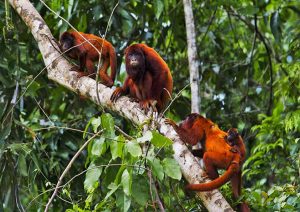
In conclusion, the Manu Rainforest remains the last wild refuge of Peru and one of the few places on Earth where nature still dictates the rules. Although the journey from Cusco can be challenging—involving long drives through the Andes and hours on a boat—the reward is incomparable: the absolute silence of the jungle interrupted only by the roar of howler monkeys.
In summary, if you are looking to disconnect from the digital world and reconnect with the essence of life, Manu awaits you in 2026 with open arms.
Frequently Asked Questions (FAQs) – Manu Rainforest 2026
1. When is the best time to visit Manu Rainforest in 2026?
Without a doubt, the best time to visit is during the dry season, from May to October. During these months, the roads are safer, and river navigation is more stable. Furthermore, wildlife tends to gather near the riverbanks, significantly increasing your chances of high-quality sightings.
2. Is it safe to travel to Manu National Park?
In fact, it is very safe as long as you travel with authorized operators. Certified agencies follow strict safety protocols, provide life jackets for boat travel, and employ expert guides who are trained in wilderness first aid and animal behavior.
3. What vaccinations do I need for the Peruvian Amazon?
It is worth noting that the Yellow Fever vaccine is mandatory and must be administered at least 10 days before your arrival. Additionally, we recommend consulting a doctor regarding malaria prophylaxis, especially if you plan to stay deep within the Reserved Zone.
4. Can I visit Manu without a tour agency?
No, access to the Reserved Zone and most parts of the Cultural Zone strictly requires an official guide and an expedition organized by an agency authorized by SERNANP. Independent travel is not permitted inside the protected areas.
5. What is the difference between Manu and Puerto Maldonado?
Fundamentally, Manu is much more pristine and less commercialized. While Puerto Maldonado is more accessible and offers luxury lodges, Manu offers superior biodiversity and a true “deep-jungle” immersion experience for serious nature enthusiasts.
6. What kind of clothing should I pack for 2026?
Consequently, you should pack quick-drying, lightweight clothes. Long pants and long-sleeved shirts are essential to protect against insect bites. Moreover, do not forget a high-quality rain poncho and rubber boots (though most tour operators provide the latter).
7. Is there internet or electricity in the jungle?
Generally speaking, there is no cell signal or Wi-Fi in the Reserved Zone. Most lodges use solar panels to provide electricity for a few hours a day, allowing you to charge cameras and flashlights. Be prepared for a digital detox.
8. Is it possible to see jaguars in Manu?
Certainly, Manu is one of the best places on Earth to see jaguars in the wild, particularly along the riverbanks of the Reserved Zone between July and September. However, please remember that wildlife sightings are never 100% guaranteed.
9. How much does a Manu tour cost in 2026?
Prices vary by zone. A 4-day tour to the Cultural Zone typically costs between $450 and $650 USD. In contrast, a 6 to 8-day expedition to the Reserved Zone ranges from $1,100 to $1,900 USD due to logistics and permits.
10. Where do the tours to Manu typically start?
Most expeditions begin in the city of Cusco. From there, you travel by overland transport through the Andes to the Cloud Forest before descending to the river to continue by motorized canoe.
11. Is the trip suitable for children or seniors?
In principle, tours to the Cultural Zone are family-friendly. However, trips to the Reserved Zone are physically demanding due to long hours on boats and hiking in humid, uneven terrain. Therefore, a moderate fitness level is recommended.
12. What kind of food is served during the expeditions?
Tours include a professional cook who prepares fresh meals based on local ingredients like rice, beans, river fish, and tropical fruits. Furthermore, operators can accommodate vegetarian or vegan diets if notified in advance.
13. Can I fly a drone in Manu National Park?
It is important to mention that drone use is strictly prohibited inside the park to avoid disturbing the wildlife. Only those with special professional or scientific permits issued by the Peruvian government may fly drones.
14. Are there health risks from insect bites?
Although there are risks, using repellent with DEET, wearing appropriate clothing, and sleeping under mosquito nets (provided by all lodges) minimizes the danger. Most travelers have a safe and healthy experience.
15. Is a 3-day trip to Manu worth it?
Honestly, 3 days is very short given the travel time from Cusco. Instead, we recommend a minimum of 4 to 5 days to truly experience the Cloud Forest and the lowland rainforest without feeling rushed.