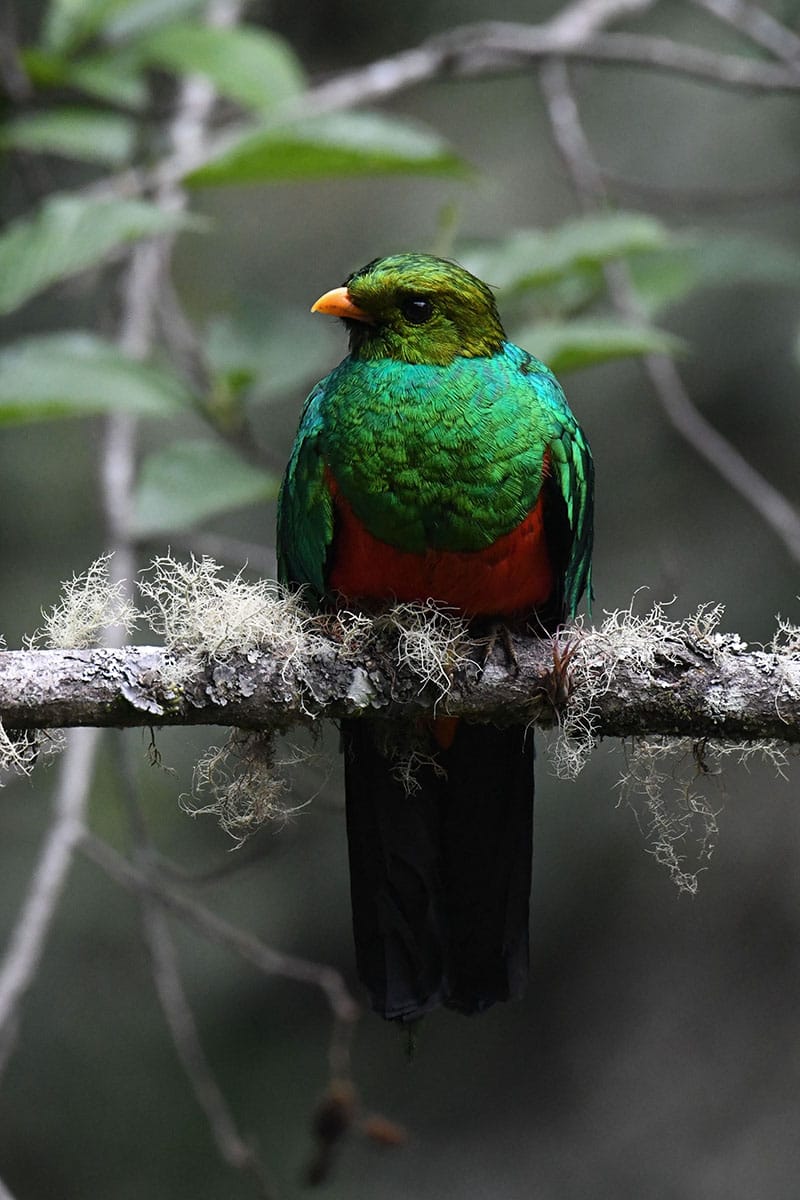
Manu Jungle Trips: The Ultimate 2026 Guide to Peru’s Untamed Rainforest
1. Introduction: The Call of the Deep Amazon
First and foremost, when we talk about the most biodiverse place on Earth, one name echoes louder than the rest: Manu.
Indeed, for those travelers who truly wish to immerse themselves in the Peruvian wilderness,
Manu jungle trips represent the pinnacle of adventure.
However, planning such a journey is not as simple as booking a hotel in a city.
In 2026, sustainable travel has become the standard, and understanding how to visit this fragile ecosystem responsibly is paramount.
In this comprehensive guide, we will break down everything from the cloud forests of the Andes to the lowland rainforests of the Madre de Dios.
2. The Geography of Wonder: Understanding the Zones
To begin with, you must understand that Manu is divided into three distinct areas.
Consequently, your choice of zone will define your entire experience Manu National Park.
-
The Cultural Zone: Similarly to a “buffer zone,” this area allows for human settlements and small-scale agriculture. It is the most accessible part.
-
The Reserved Zone: On the other hand, this is where the high-density wildlife sightings happen. Access is strictly limited to authorized operators.
-
The Intangible Zone (National Park): Notably, this area is reserved for scientific research and the protection of indigenous tribes in voluntary isolation. Essentially, it is off-limits to tourists.
3. How to Get There: The Journey from Cusco
Regarding logistics, most Manu jungle trips start in the historic city of Cusco.
Subsequently, the transition from the high Andes to the Amazon basin is one of the most spectacular drives in the world.
-
The Road to Paucartambo: Initially, you climb to over 3,500 meters before descending into the “Cloud Forest.”
-
The Boat Transition: Once you reach Atalaya or Shintuya, the road ends – Jungle Trips.
-
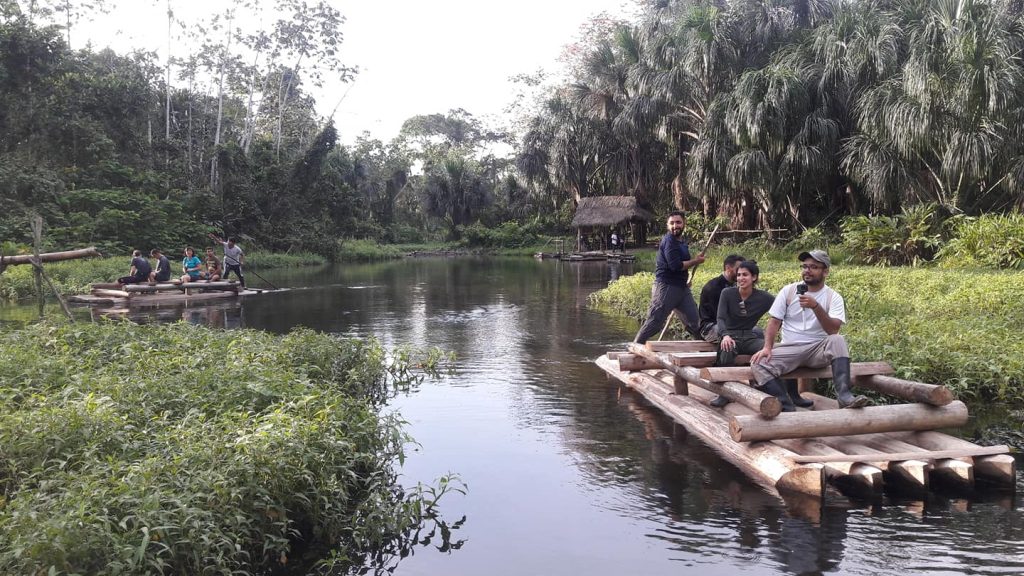
Therefore, your journey continues by motorized canoe, the true “highways” of the Amazon Trips.
4. Wildlife Spotting: What Can You Actually See?
Furthermore, the primary reason travelers seek out Manu is the wildlife.
Because the park has been protected for decades, the animals here do not fear humans as much as in other regions.
-
The Jaguar: Specifically, the banks of the Manu River are the best places in the world to see this feline during the dry season.
-
Giant River Otters: In addition to jaguars, these “wolves of the river” are a highlight of Cocha Salvador.
-
The Macaw Clay Licks: Indeed, seeing hundreds of macaws gather to eat clay is a visual spectacle that defies description.
5. 2026 Logistics: Prices, Permits, and Lodging
In terms of costs, traveling to the deep Amazon is an investment.
In 2026 Jungle trips, permit prices have been adjusted to fund better ranger patrols.
-
Expedition Costs: Generally, a high-quality 7-day trip to the Reserved Zone ranges from $1,500 to $2,500 USD.
-
Sustainable Lodges: Notably, new eco-lodges are now incorporating solar power and rainwater harvesting systems.
6. The “Know Before You Go”
Before you pack your bags, there are critical details to consider.
For instance Manu Trips:
-
Health: Above all, the Yellow Fever vaccine is mandatory.
-
Gear: Similarly, do not underestimate the humidity. Quick-dry clothing is your best friend.
-
Ethics: Most importantly, never feed the animals or attempt to contact isolated tribes.
7. Comparative: Manu vs. Other Amazon Hubs
To illustrate the difference, let’s compare Manu with Tambopata or Iquitos Jungle trips.
While Iquitos is famous for its flooded forests and Tambopata for its ease of access, Manu remains the “gold standard” for pristine, undisturbed primary forest.
Consequently, if you are a serious birder or wildlife photographer, Manu is the non-negotiable choice.
8. Conclusion: Why 2026 is Your Year for Manu Jungle Trips
In conclusion, the Amazon is changing, and the time to see it in its most “untamed” state is now.
Ultimately, a Manu jungle trip is not just a vacation; it is a pilgrimage to the heart of life itself.
Fauna of Manu National Park: A Modern Noah’s Ark
First and foremost, it is essential to understand that Manu National Park does not simply house many animals; it protects species that are nearly impossible to observe anywhere else on Earth. Due to its strict protection since 1973, the wildlife here exhibits natural behavior and is significantly less fearful of human presence compared to other regions.
1. The Great Cats: Kings of the Jungle
Undoubtedly, the most coveted encounter for travelers is a sighting of the Jaguar (Panthera onca).
-
Consequently, the Manu Reserved Zone has established itself as the premier location on the planet for photographing these felines, particularly along the riverbanks during the dry season.
-
In addition to the jaguar, the park is home to the elusive Puma, the Ocelot, and the Jaguarundi. Nevertheless, these species are primarily nocturnal and require a great deal of luck and patience to be spotted.
2. Primates: The Kingdom of 13 Monkeys
On the other hand, Manu is home to 13 distinct species of monkeys. To illustrate, during a single morning trek, it is possible to observe:
-
Black Spider Monkey (Ateles chamek): The acrobat of the trees, renowned for its incredible agility.
-
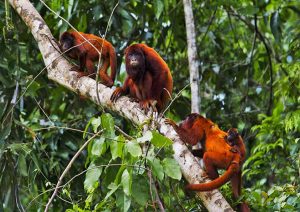
Red Howler Monkey (Alouatta seniculus): Whose roar can be heard from kilometers away, marking the start of the day in the rainforest.
-
Capuchin Monkey: Famous for its high intelligence and curiosity.
-
Squirrel Monkeys and Marmosets: Which typically travel in large, energetic family groups, offering a spectacle full of life.
3. Giants of Water and Land
Likewise, the aquatic ecosystems of Manu, such as the cochas (oxbow lakes), harbor prehistoric giants:
-
Giant River Otter (Pteronura brasiliensis): Known as the “river wolf,” this is an endangered species that lives in noisy, territorial family groups in Cocha Salvador.
-
Black Caiman: The largest predator in the lagoons, capable of reaching lengths of up to 5 meters.
-
South American Tapir: The largest terrestrial mammal in South America. In fact, many expeditions include visits to “tapir clay licks” where these massive animals gather at night to consume essential mineral salts.
4. A Paradise for Birdwatchers
Regarding avian life, Manu boasts over 1,000 species, representing 10% of all bird species in the world.
-
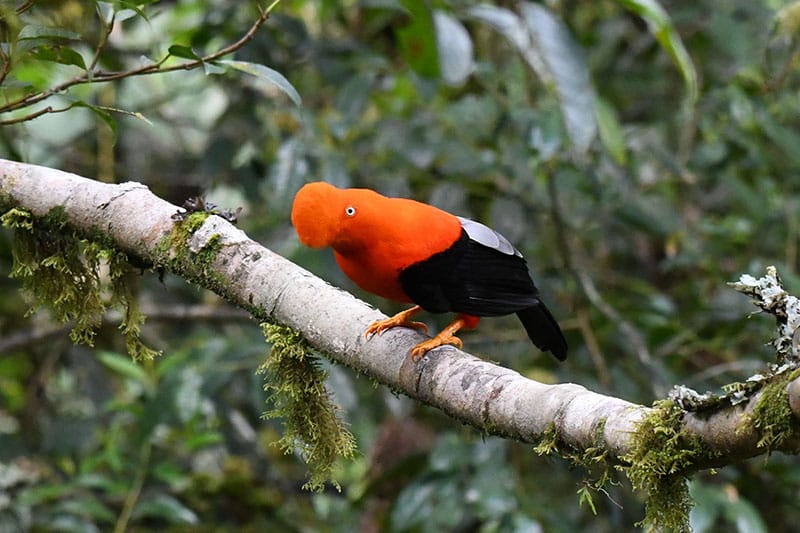
Andean Cock-of-the-Rock (Rupicola peruvianus): Peru’s national bird. Basically, travelers visit the cloud forest to witness their spectacular courtship dance at designated “leks.”
-
Macaws and Parrots: Hundreds of these birds gather at clay licks (collpas), creating a vibrant rainbow of sound and color.
-
Harpy Eagle: The most powerful bird of prey in the world, which builds its nests in the crowns of Manu’s tallest emergent trees.
Frequently Asked Questions about Manu Jungle Trips – Peru Amazon
Additionally, answering these common traveler concerns will help you prepare for the specific challenges of the Peruvian Amazon.
1. Are Manu jungle trips worth the higher cost compared to other regions?
Indeed, they are. While trips to Iquitos or Tambopata are generally cheaper due to easier logistics, Manu offers a level of pristine biodiversity that is unmatched. Because the Reserved Zone limits the number of visitors, you experience the forest in its most natural state, making it a “once-in-a-lifetime” investment for serious nature lovers.
2. How many days do I need for a complete Manu National Park experience?
Generally speaking, we recommend a minimum of 6 to 8 days. First in Manu National Park, it takes at least a day and a half just to reach the heart of the Reserved Zone from Cusco.
Subsequently, spending at least 3 or 4 full days deep in the jungle ensures you have enough dawn and dusk boat sessions to spot jaguars and rare primates.
3. Is it safe to visit the Amazon rainforest in 2026?
Absolutely, provided you travel with a licensed and reputable operator. In 2026, safety standards for river transport and jungle trekking have reached new heights. Furthermore, guides are trained in wilderness first aid. However, it is essential to follow your guide’s instructions regarding wildlife proximity and trail safety at all times.
4. What is the best month for wildlife photography in Manu National Park?
Specifically, the months of July, August, and September are the “golden months.” During this time, the water levels are at their lowest, forcing animals like the jaguar, tapir, and caiman to the riverbanks to drink and hunt. Consequently, visibility is at its peak for those carrying professional long lenses.
5. Do I need to be in peak physical condition for Manu jungle trips?
In reality, most tours are classified as “moderate.” While you don’t need to be an elite athlete, you should be comfortable walking 2-3 hours on uneven, muddy terrain. Similarly, the heat and humidity can be taxing, so being in good health is important to enjoy the experience without exhaustion.
6. Can I see uncontacted tribes during my trip?
Most importantly, no. The Peruvian government and park authorities strictly protect the territorial rights of indigenous groups in voluntary isolation (like the Mashco Piro). Indeed, any attempt to contact them is illegal and dangerous for both parties. Instead, your trip will focus on the incredible flora and fauna within authorized tourist zones.
7. What kind of food is served on an Amazon expedition?
Surprisingly, the food is a highlight! For instance, most lodges employ local chefs who prepare fresh, organic meals using regional ingredients like juane, plantains, and jungle fruits. In addition, most operators can easily cater to vegan, gluten-free, or vegetarian diets if notified in advance.
8. Is there a risk of Malaria in Manu National Park?
Technically, Manu is a low-risk area for Malaria compared to other tropical regions. Nevertheless, it is present. Therefore, we recommend consulting your doctor about antimalarial prophylaxis. Above all, the best prevention is avoiding bites by using repellent and wearing long sleeves at dawn and dusk.
9. What are the luggage weight limits for these trips?
Typically, because transport involves small motorized canoes, there is a weight limit of 10kg to 15kg (22-33 lbs) per person. Consequently, most travelers leave their main luggage in a secure storage room at their hotel in Cusco and only bring a waterproof duffel bag into the jungle.
10. Will I have electricity to charge my camera batteries?
Nowadays, most eco-lodges in Manu use solar panels. However, electricity is often limited to specific hours in the evening (usually 6:00 PM to 9:00 PM). Thus, we strongly suggest bringing at least two spare batteries and a high-capacity power bank to ensure you don’t miss a single shot.
11. What is the difference between a “Primary” and “Secondary” forest?
Basically, a primary forest (which you find deep in Manu) is an undisturbed, ancient ecosystem with giant trees and complex layers. In contrast, a secondary forest is one that has been cleared and is regrowing. Because Manu protects vast tracts of primary forest, it supports a much higher density of rare wildlife.
12. How do I book a sustainable and ethical tour?
To ensure your trip is ethical, look for operators with certifications from organizations like Rainforest Alliance or those that have clear partnerships with local communities. Ultimately, choosing a responsible operator ensures that your tourism dollars contribute directly to the conservation of the park and the well-being of its inhabitants.
Browse our 2026 Manu Expedition Dates and secure your permit today!